On Judgment
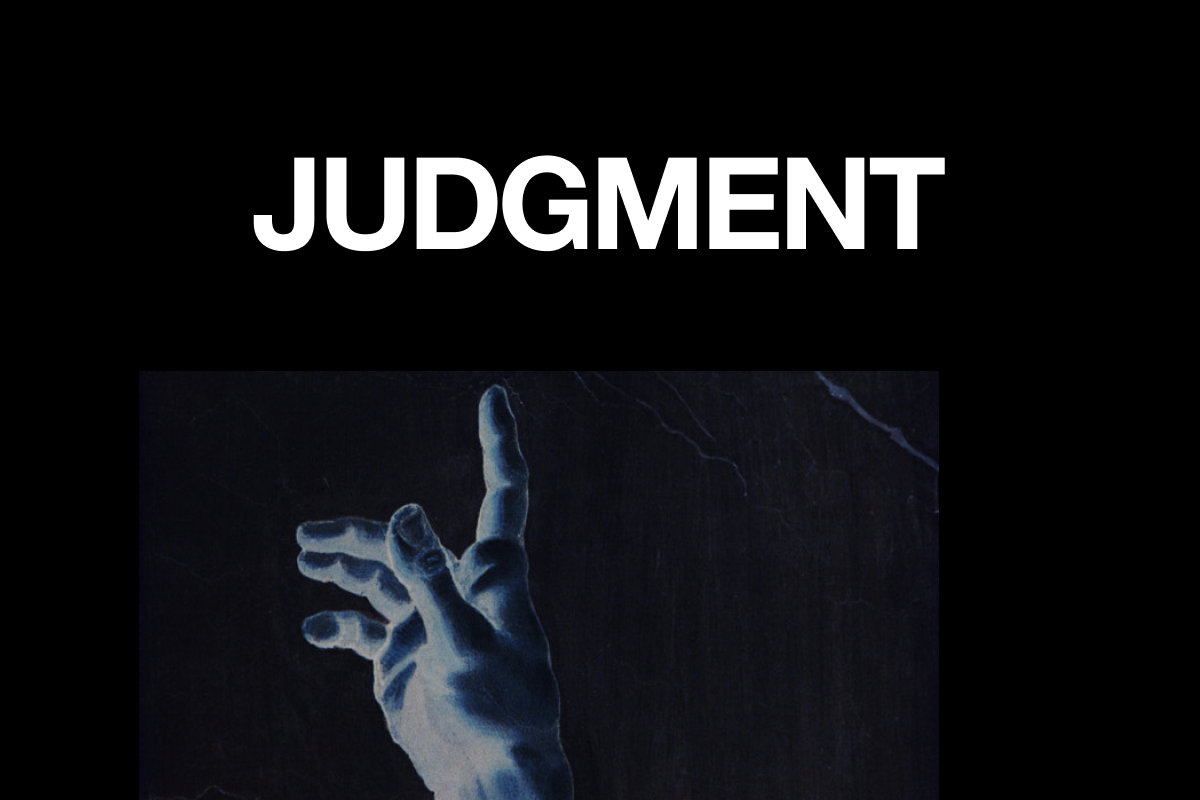
We can’t fully eliminate judgment despite our best efforts to appear objective and rational and it deeply disturbs us. We seek to hide from judgment at all costs, obfuscating it below 7 layers of decisions involving numbers to give us a drugging of sorts that in our confused and appeased state we can hazily feel as though objectivity was done here, that rationalism was performed, that truth exists when numbers are used and that surely, we have arrived at it.
In the corners of our apartments, in the shadows of our thoughts, lurks the incomprehensible hooded spectre of judgment — a facility we do not understand, do not have words to describe, yet cannot go a moment without. This critical facility is what we designers rely on at the core of our practice, and yet fundamentally reminds us that our Western intellectual tradition, where we feel we have arrived at the safe haven of objectivity and mathematics, is ultimately shattered at a mere touch. Like a bubble bursting, underneath our “data-driven” decisions are arbitrary human decisions, even the decision to obfuscate our judgment with numbers, is itself an irrational judgment where the hierarchies of epistemology were predetermined at the outset. Below my “41 different shades of blue I tested with users” was the decision of a methodology being superior to others, the testing conditions, the user subjects, the preference of this methodology to others. We are sitting atop a mountain of judgment, thinking we are in a plain. We are amid the enemy thinking them the ally camp. But underneath their blue coat of “objectivity” is the blood-red coat of judgment.